It is with eager anticipation and undeniable satisfaction that I finally ticked “Forsaking All Other” by Catherine Meyrick off my reading list—a narrative replete with the intense entanglements of romance, the menacing shadows of religious persecution, and the resilient spirit of a woman navigating a man’s world on her own terms.
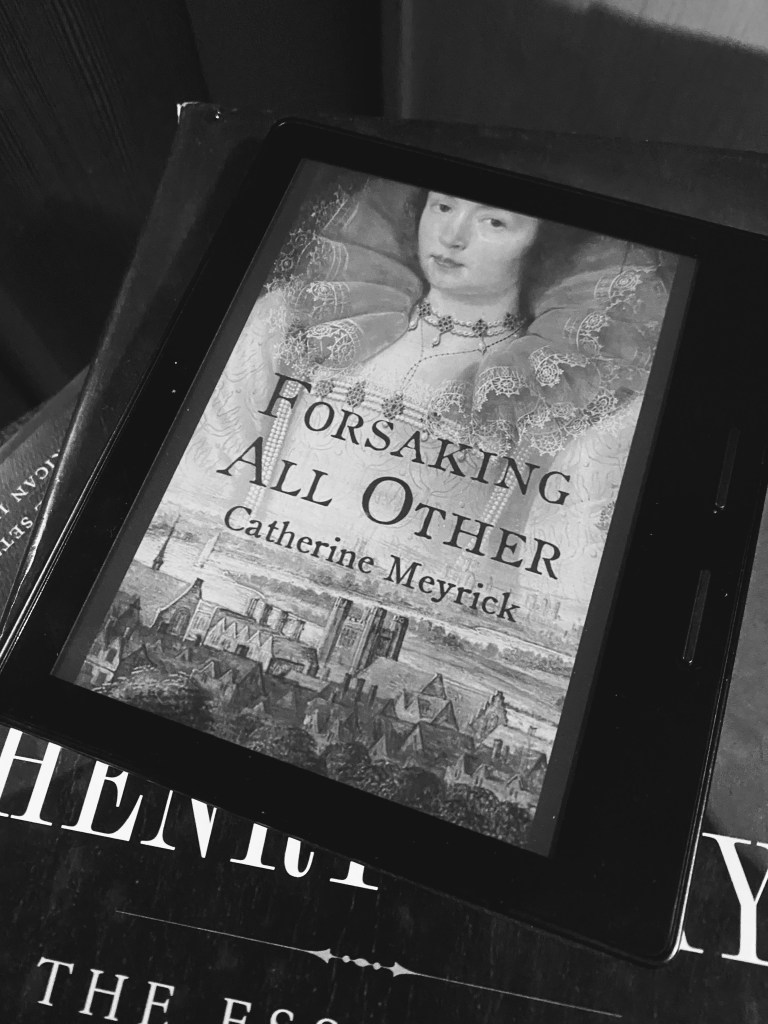
Bess Stoughton, a waiting woman to the well-connected Lady Allingbourne, is not just a widow but a symbol of defiant femininity. She emerges as a compelling protagonist, whose vivid journey from obedient daughter to a woman of her own making is as turbulent as it is transformative. When faced with a looming marriage to a despicable suitor arranged by her father, Bess’s rebellion is a refreshing gust of wind, propelling her into a world where choices are as treacherous as they are liberating.
Edmund Wyard stands as the wealthy noble, scarred, not just by the battles he’s faced in Ireland but by the pressures of familial expectations. His internal struggle—a duel between duty and desire—adds a compelling layer to the narrative. Meyrick skilfully weaves the silent battles of the soul into the tapestry of a world seeped in political and religious turmoil.
The romance between Bess and Edmund is as tender as it is turbulent. It’s a dance between social constraints and the unrestrained yearnings of the heart. Each stolen glance and unspoken sentiment build a silent sonnet of affection, echoing the tumultuous era they inhabit. When the papal gaze, menacing and inescapable, turns towards Bess, a chilling undercurrent of danger permeates the narrative. Every alliance is suspect; every friendship, a potential betrayal.
In “Forsaking All Other,” Catherine Meyrick doesn’t just tell a story—she immortalizes a dance of romance and rebellion that lingers, haunting and beautiful, long after the last word.
 Kat between the lines...